

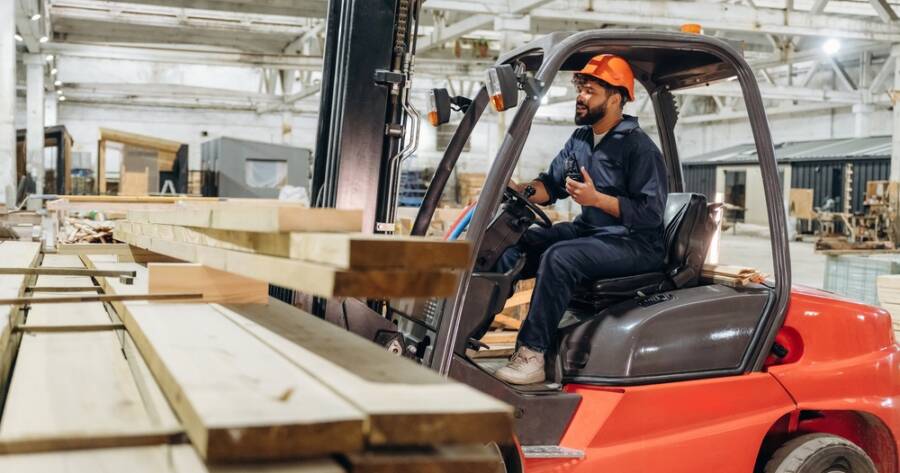
Forklift operators are essential to how goods move through warehouses, distribution centers, and industrial facilities across the country. Their work shapes the rhythm of supply chains, touching everything from raw material intake to final product shipment.
The Role of a Forklift Operator in Logistics
A forklift operator—sometimes called a material handler—is a trained, certified professional responsible for moving heavy loads throughout a facility using forklifts, pallet jacks, and related equipment (source). These professionals work across a wide range of environments, from traditional warehouse floors and manufacturing plants to construction sites and cold storage facilities. What ties all of these settings together is the need for someone who can reliably transport large quantities of materials without incident.
Within the broader logistics industry, forklift operators serve as the connective tissue between receiving docks, storage areas, and shipping zones. Without their contributions, even the most well-organized supply chain would slow to a halt. Their ability to move cargo and inventory efficiently—often without additional assistance—makes them key players in keeping operations on schedule (source).
Day-to-Day Responsibilities on the Job
The daily duties of a forklift operator extend well beyond simply driving machinery. At the core of the role is the receiving and repositioning of materials—operators must verify that incoming loads match inventory expectations, confirm items are directed to the correct storage locations, and flag any damaged goods or quality discrepancies they encounter (source). This attention to detail is critical in environments where inventory accuracy directly impacts order fulfillment and customer satisfaction.
Forklift operators also handle a variety of materials depending on the facility they work in. Some move finished consumer goods, while others transport raw materials or even hazardous substances that fall under HAZMAT classifications (source). In either case, following OSHA safety regulations is a non-negotiable part of the job. Proper load securing, travel speed management, and awareness of pedestrian traffic zones are all part of daily practice.
Beyond material movement, operators often take on inventory-related tasks such as cycle counting, stock rotation, and data entry into warehouse management systems. Many organizations integrate forklift operation into broader facility management roles, which can include overseeing equipment inspections and keeping the fleet of vehicles in working condition (source). This expanded scope means operators often collaborate with supervisors, logistics coordinators, and maintenance teams.
Equipment Maintenance and Safety Duties
Forklift operators do not simply hand off their equipment at the end of a shift and walk away. Many are expected to perform routine vehicle checks before and after operation. These inspections typically cover brake functionality, lighting systems, mirrors, tire pressure, and hydraulic and lifting mechanisms (source). Identifying a mechanical issue before it becomes a workplace hazard is a direct contribution to overall site safety.
Engine maintenance may also fall within the operator’s scope depending on the facility’s staffing structure. While dedicated mechanics handle more involved repairs, operators who catch problems early help minimize equipment downtime and reduce operational disruptions. This proactive approach to maintenance reflects the level of responsibility the role carries in practice.
Skills and Qualifications That Define the Role
Becoming a forklift operator requires more than passing a driving test. Certification is a baseline requirement, and operators must demonstrate competency with the specific types of equipment used at their facility. Strong spatial awareness, physical stamina, and the ability to work in fast-paced environments are all traits that contribute to long-term success in the role.
Communication skills matter too. Operators regularly interact with receiving teams, floor managers, and warehouse associates. Accurately reporting damaged inventory, confirming load placements, and flagging safety concerns all depend on clear, direct communication. An operator who can coordinate effectively with the surrounding team helps the entire logistics operation run more smoothly.
Compensation for skilled forklift operators reflects the demands of the position. Median annual earnings in the field reach approximately $46,620 per year, signaling steady demand for qualified professionals throughout the logistics sector (source). Hourly wages vary considerably based on experience, location, and industry, with some operators earning significantly above average rates in specialized roles.
Why You Should Learn More About Forklift Operators Today
Forklift operators occupy a foundational position within the logistics industry, managing the physical movement of goods that keeps supply chains functioning at every level. Their responsibilities span equipment operation, inventory accuracy, safety compliance, and vehicle upkeep—a combination that demands both technical skill and professional reliability. As e-commerce growth and manufacturing demands continue to drive warehouse activity across the United States, the contributions of forklift operators carry increasing weight. Understanding the full scope of what these professionals do offers valuable perspective on how logistics networks actually function, whether someone is exploring a career path, managing a workforce, or simply curious about the industry that delivers goods to businesses and homes every day.